

Wondering whether that sputtering dishwasher or temperamental washing machine deserves another chance? You’re not alone – homeowners across Burnaby face this costly dilemma every day, and making the wrong choice can cost you hundreds or even thousands of dollars.
Picture this: It’s Sunday morning in your Burnaby home, you’re prepping for your weekly meal prep session, and suddenly your refrigerator starts making that dreaded clicking sound. Or maybe your washing machine decides to turn your laundry room into a mini water park. We’ve all been there, standing in front of a malfunctioning appliance with that familiar sinking feeling in our stomachs.
The big question looming over us isn’t just “What’s wrong?” but “Is this thing worth saving?” As a Vancouver homeowner, you’re probably familiar with the unique challenges our coastal climate brings to home maintenance. The salty air, fluctuating temperatures, and occasional power outages can all take a toll on our trusty household helpers. But here’s the thing I’ve learned after years of dealing with appliance drama: not every hiccup means it’s time to start shopping for a replacement.
Key Outtakes:
- Follow the 50% rule: if repair costs exceed half the replacement price, consider replacing the appliance rather than investing in costly repairs
- Vancouver’s coastal climate accelerates appliance wear due to salt air and humidity, making regular maintenance crucial for extending lifespan
- Home warranties cost $500-600 annually but may not cover all repair scenarios compared to manufacturer warranties that focus on specific defects
- Local Burnaby repair services typically charge $195-500 per repair, making thorough cost analysis essential before proceeding
- Appliances under 8-10 years old with good maintenance records are usually worth repairing, while older units may warrant replacement
Understanding Appliance Warranties vs Direct Repair Costs

Before diving into the repair-versus-replace decision, let’s break down the different types of coverage available and how they stack up against paying for repairs out of pocket. Understanding these options can save you serious money and headaches down the road.
Manufacturer warranties typically provide coverage for one to five years and focus specifically on defects in materials or workmanship. These warranties usually cover both parts and labor costs, making them the most valuable form of protection during an appliance’s early years. If your appliance is still under manufacturer warranty, repair is almost always the right choice – you’re basically getting professional service at no cost beyond a possible service call fee.
Extended warranties present another option by adding two to four years of coverage beyond the manufacturer’s original warranty period. While these plans require additional upfront investment, they can provide peace of mind for expensive appliances that may experience costly component failures after the initial warranty expires. However, extended warranties often come with restrictions on coverage and may not include the same level of comprehensive protection as manufacturer warranties.
Home warranties offer a different approach by providing bundled coverage for multiple appliances and home systems. These plans typically cost between $500 and $600 annually, plus service fees of $60 to $100 for each repair call. While this coverage can protect against unexpected expenses across multiple appliances, the service fees and potential limitations on repair quality make it important to carefully evaluate whether this investment provides genuine value for your specific situation.
Direct repair costs in the Burnaby market vary significantly based on the type of appliance and the complexity of the required work. Local repair services typically charge diagnostic fees of $139 to $179, though these fees are usually waived if you proceed with the recommended repairs. Understanding these baseline costs helps you evaluate whether warranty coverage or direct payment provides better value for your specific repair needs.
The 50% Rule and Smart Decision-Making Framework
Now that we understand the coverage landscape, let’s dive into the mathematical approach that should guide your repair-versus-replace decisions. This isn’t just about comparing repair quotes to appliance store price tags – there are several layers to consider that can significantly impact your long-term costs and satisfaction.
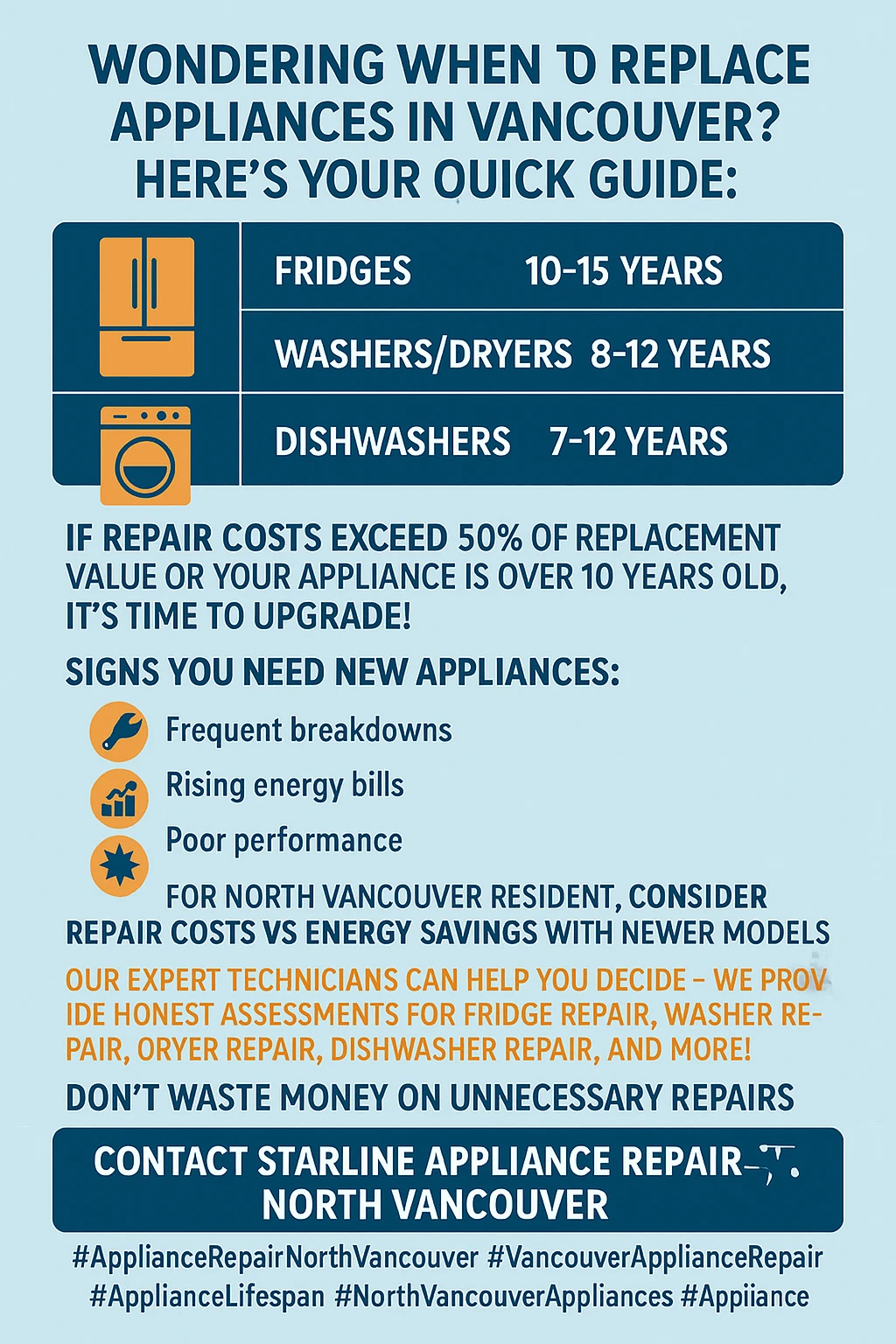
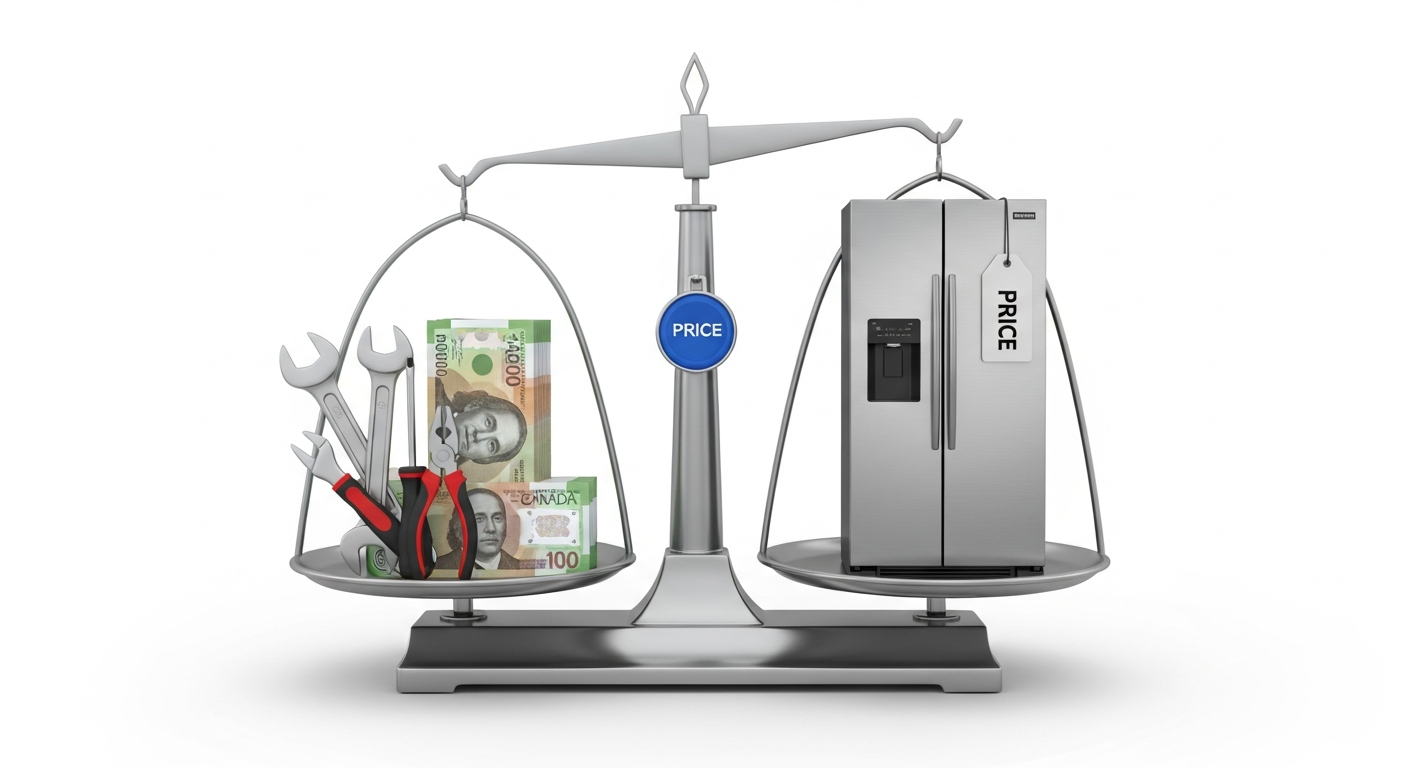
The widely recognized 50% rule provides a reliable starting point for repair versus replacement decisions across all appliance categories. This guideline suggests that if repair costs exceed 50% of the replacement cost for an equivalent appliance, replacement typically offers better long-term value. The calculation is straightforward: divide the estimated repair cost by the replacement cost, and if the result exceeds 0.5, replacement generally makes more financial sense than investing in repairs.
However, this rule requires careful application of all relevant costs to provide accurate guidance. The replacement cost should include not just the appliance price but also installation, delivery, and disposal fees that can add hundreds of dollars to the total expense. Similarly, repair costs should account for diagnostic fees, parts costs, labor charges, and any additional service calls that might be required if the initial repair doesn’t resolve all issues.
Several situations warrant deviation from the standard 50% rule, particularly when dealing with high-end appliances or special circumstances. Premium appliances with superior build quality may justify repair costs exceeding 50% of replacement value because they offer better performance and longer expected lifespans than basic replacement units. Additionally, appliances still under warranty should generally be repaired regardless of cost, as warranty coverage eliminates the financial risk associated with the repair investment.
Age plays a crucial role in applying the 50% rule effectively, as newer appliances typically warrant repair while older units may be better candidates for replacement. Refrigerators typically last 10 to 15 years, washing machines 8 to 12 years, and dishwashers 9 to 10 years, making age relative to expected lifespan an important factor in repair decisions. An appliance that has reached 80% of its expected lifespan may warrant replacement even if repair costs fall below the 50% threshold.
Vancouver-Specific Climate and Environmental Factors
Living in the Vancouver area brings unique challenges that don’t exist in drier, more stable climates, and these factors should absolutely influence your repair-versus-replace decisions. Understanding how our local environment affects appliances can help you make choices that account for these regional realities rather than relying solely on general advice that might not apply to our coastal conditions.
Our proximity to the ocean means salt air infiltration affects homes throughout Burnaby, Richmond, and even inland areas like Coquitlam. This salt air can accelerate corrosion in appliance components, particularly affecting metal parts in washing machines, dishwashers, and the exterior coils of refrigerators. If you’re dealing with corrosion-related issues on an appliance that should theoretically have several years of life left, you might be looking at an accelerated replacement timeline regardless of typical lifespan expectations.
Vancouver’s notorious dampness creates its own set of challenges, especially for appliances dealing with moisture management. Front-loading washing machines, while energy-efficient, are particularly susceptible to mold and mildew issues in our humid climate. If you’re facing repeated seal replacements or persistent odor problems, these aren’t just isolated repairs – they’re symptoms of an ongoing battle against our environment that might make replacement with a top-loading model more sensible despite the energy efficiency trade-off.
The frequency of power fluctuations and outages in Vancouver can stress appliance electronics more than in areas with stable power grids. If you’re experiencing repeated control board failures or electronic component issues, consider whether a newer appliance with better surge protection might save you from ongoing frustration and repair costs. Some neighborhoods, particularly older areas with aging electrical infrastructure, see more appliance electronics problems than others.
Temperature fluctuations, while milder than many Canadian cities, can still affect appliance performance. Heat pumps and air conditioning units work harder in our variable climate, and appliances in unheated spaces like garages or basements face more thermal stress than in consistently climate-controlled environments. When evaluating repair costs for these appliances, factor in whether Vancouver’s climate contributed to the failure and whether it’s likely to cause similar problems in the future.
Appliance-Specific Lifespan and Repair Considerations
Different appliances have unique characteristics that affect repair versus replacement decisions, making it important to understand the specific factors relevant to each type of equipment in your home. Let’s break down the key considerations for major appliances you’re likely to encounter in your Burnaby residence.
Dishwashers typically require replacement every 9 to 12 years, with common problems including rust formation, persistent standing water, and door latch failures that indicate the unit is nearing the end of its useful life. When dishwashers begin experiencing multiple issues simultaneously, replacement often provides better value than attempting to address each problem individually through separate repairs. However, if your dishwasher is under 7 years old and experiencing isolated issues like spray arm problems or drainage troubles, repair usually makes financial sense.
Refrigerators represent the most expensive appliances in most homes, making repair decisions particularly important for your budget. These workhorses typically last 12 to 15 years, but Vancouver’s coastal climate can sometimes shorten this lifespan due to salt air affecting exterior coils and seals. For refrigerators under 10 years old experiencing issues like door seal problems, ice maker troubles, or temperature control issues, repair almost always makes sense. However, failing compressors, frequent leaks, or interior damage on older units often signal it’s time for replacement.
Washing machines and dryers face unique challenges in our damp climate, particularly front-loading washers that can develop mold and seal issues. Washers typically last 8 to 12 years, while dryers can soldier on for 10 to 13 years with proper maintenance. For units under 8 years old with issues like belt problems, pump failures, or minor leaks, repair is usually worthwhile. However, constant balancing issues, major leaks, or motor problems in older units often indicate replacement time has arrived.
Range and oven repairs present interesting decisions because these appliances can last 13 to 15 years or more with proper care. Simple fixes like broken burners, faulty igniters, or temperature sensor issues are almost always worth repairing, especially on units under 10 years old. However, repeated burner failures, significant interior rust, or control board problems in older units may justify replacement with more energy-efficient models.
Hidden Costs and Financial Considerations
When crunching the numbers for repair versus replacement decisions, many homeowners focus solely on the obvious costs – the repair quote versus the appliance price tag. However, several hidden expenses can dramatically shift this calculation, and understanding these factors helps ensure you make truly informed decisions that protect your budget.
Replacement costs extend far beyond the appliance purchase price, particularly in the Vancouver area where delivery logistics can be challenging. Installation fees typically range from $100 to $500 depending on the complexity of the work required, while delivery charges add another $50 to $100 to your total. Disposal of your old appliance can cost $75 to $150, and if your home requires electrical or plumbing modifications to accommodate modern appliances, these upgrades can add hundreds more to your final bill.
Repair costs also include potential hidden expenses that should factor into your decision-making process. While diagnostic fees of $139 to $179 are usually waived when you proceed with repairs, additional problems discovered during the repair process can inflate your final bill beyond initial estimates. Labor charges, parts markup, and potential warranty costs for the repair work should all be factored into your calculations before making a final decision.
Energy efficiency considerations add another layer to your financial analysis, especially with rising utility costs in British Columbia. Modern appliances often use 20-40% less energy than models from even five years ago, meaning your old refrigerator might cost an extra $200 annually in electricity despite functioning adequately. When evaluating repair costs, consider whether continued operation of an inefficient appliance makes financial sense compared to the energy savings offered by newer models.
Warranty coverage for repairs versus new appliances also affects your long-term financial exposure. Quality repairs typically come with 90-day to one-year warranties on parts and labor, providing some protection against immediate re-failure. New appliances, however, come with manufacturer warranties ranging from one to five years, potentially saving thousands in repair costs if problems develop during the warranty period.
Frequently Asked Questions
How do I know if my appliance is worth repairing versus replacing?
Start with the 50% rule: if repair costs exceed half the price of a comparable new appliance, replacement usually makes more sense. However, also consider the appliance’s age relative to its expected lifespan, your local climate’s impact on longevity, and any hidden costs associated with both repair and replacement options.
For appliances under 5 years old, repair almost always makes sense unless you’re dealing with catastrophic failure or safety issues. Between 5-10 years old, apply the 50% rule carefully while considering energy efficiency improvements in newer models. Over 10 years old, replacement often provides better long-term value unless repair costs are very low.
Are home warranties worth the cost for appliance protection in Burnaby?
Home warranties can provide value if you have multiple older appliances and prefer predictable annual costs over unexpected repair bills. At $500-600 annually plus service fees, they make sense for homes with several aging appliances. However, if you have mostly newer appliances still under manufacturer warranty, or just one or two older units, direct repair payments often cost less overall.
Consider that home warranty companies often use contracted repair services that may not provide the same quality as independent local technicians. Additionally, service call fees of $60-100 per visit can add up quickly if you experience multiple issues throughout the year.
How does Vancouver’s coastal climate affect appliance lifespans?
Salt air and high humidity can reduce expected appliance lifespans by 20-30% compared to drier climates, particularly affecting metal components, seals, and exterior coils. This means a refrigerator that might last 15 years in Calgary could need replacement after 10-12 years in Vancouver. Regular maintenance becomes even more critical in our climate, including cleaning coils, checking seals, and ensuring proper ventilation around appliances.
Front-loading washers are particularly susceptible to mold and mildew issues in our humid environment, while outdoor appliances like heat pumps face additional stress from our variable weather patterns. Factor these regional considerations into your repair-versus-replace timeline decisions.
What safety issues should immediately trigger appliance replacement?
Never attempt repairs on appliances showing signs of gas leaks, electrical shorts, overheating, or producing smoke, sparks, or burning smells. These safety hazards require immediate replacement regardless of cost considerations. Gas appliances with suspected leaks, electrical appliances tripping breakers repeatedly, or any appliance producing unusual odors should be disconnected and replaced promptly.
Additionally, appliances with cracked drums, damaged door seals that could trap users, or structural damage that affects safe operation should be replaced rather than repaired, even if the repair costs seem reasonable.
When should I choose repair even if it violates the 50% rule?
High-end appliances with superior build quality may justify repair costs exceeding 50% of replacement value because comparable new units often cost significantly more than basic models. Additionally, appliances still under warranty should almost always be repaired regardless of cost, as warranty coverage eliminates your financial risk.
Environmental considerations might also influence your decision – keeping a functional appliance out of the landfill through strategic repairs can align with sustainability goals, especially if the appliance still has several years of useful life remaining after the repair.
Wrapping Up
Making smart appliance repair versus replacement decisions requires balancing multiple factors including age, cost, energy efficiency, and your local environment’s impact on appliance longevity. By applying the 50% rule thoughtfully while considering Vancouver’s unique coastal challenges, you can make confident choices that protect your budget and keep your home running smoothly.
When you’re facing appliance troubles in North Vancouver, West Vancouver, or Burnaby, trust the experts at Starline Appliance Repair North Vancouver to provide honest assessments and quality repairs. Our experienced technicians understand how local climate conditions affect appliance performance and can help you make informed decisions about whether repair or replacement makes the most sense for your situation. Contact us today for reliable diagnostics and transparent advice that puts your needs first.