

Vancouver’s Earthquake-Prone Appliances Need Seismic Safety
Worried about how Vancouver’s next big earthquake could turn your trusted kitchen appliances into dangerous projectiles? Living in the Cascadia Subduction Zone means your refrigerator, washing machine, and water heater could become serious safety hazards during seismic events – but the right preparation can protect both your family and your investment.
Living in Vancouver means accepting that we’re sitting on one of North America’s most seismically active regions. While most of us have emergency kits and know to “drop, cover, and hold on,” there’s one crucial aspect of earthquake preparedness that many homeowners overlook: protecting their appliances from seismic damage.
I learned this lesson the hard way when a friend in Burnaby discovered their water heater had shifted during a minor tremor, stressing the gas connection in ways that could have led to a dangerous leak. It was a wake-up call that got me thinking about all the heavy, potentially hazardous appliances scattered throughout our homes – and how unprepared most of us are for what could happen when the ground really starts shaking.
Key Outtakes:
- Vancouver faces significant earthquake risk from the Cascadia Subduction Zone, which can produce magnitude 9.0+ earthquakes with 4-6 minutes of intense shaking that affects all types of home appliances
- Unsecured appliances become dangerous projectiles during earthquakes, causing injuries and creating fire or flood hazards through broken gas lines and water connections
- Proper appliance anchoring using flexible straps, seismic-rated connectors, and professional installation can prevent most earthquake-related appliance damage and safety hazards
- Post-earthquake appliance inspection must focus on detecting gas leaks, electrical damage, water line breaks, and internal component shifting before resuming normal use
- Professional appliance repair services in Vancouver provide essential expertise for safely restoring earthquake-damaged appliances and ensuring proper code compliance
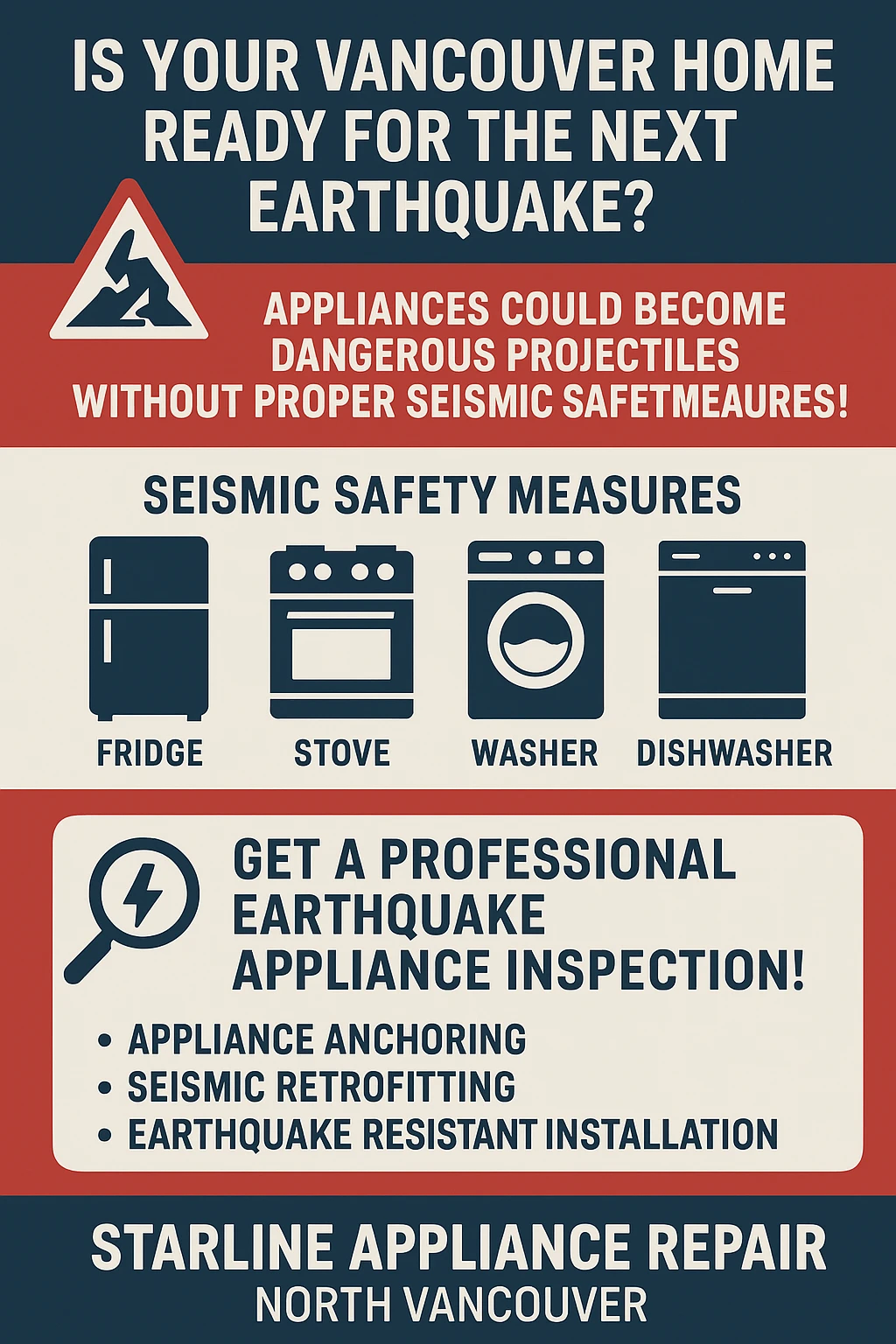
Understanding Vancouver’s Unique Seismic Risks
Vancouver’s location makes appliance protection more critical than in most other Canadian cities. We sit directly above the Cascadia Subduction Zone, a massive fault system that stretches from Northern California to British Columbia and has the potential to generate catastrophic earthquakes reaching magnitude 9.0 or higher. Scientists estimate a 7-15% probability of such an event occurring within the next 50 years, with geological evidence showing these major earthquakes happen approximately every 400-600 years.
What makes this particularly concerning for homeowners in neighborhoods like Kitsilano, West End, and Mount Pleasant is that when the next major earthquake strikes, we can expect 4-6 minutes of intense ground shaking. That’s not just a quick jolt – it’s an extended period of violent movement that will test every appliance in your home. The last known megathrust earthquake along this zone occurred in 1700, creating a tsunami that reached Japan’s coastline.
Metro Vancouver’s geological foundation creates additional challenges that most homeowners don’t realize. Our region is built on a deep sedimentary basin that acts like a bowl, trapping and amplifying seismic waves. This geological feature can increase both the intensity and duration of earthquake shaking compared to areas built on solid bedrock. For appliances, this amplification effect means they may experience more severe movement during an earthquake than similar appliances in other seismically active regions.
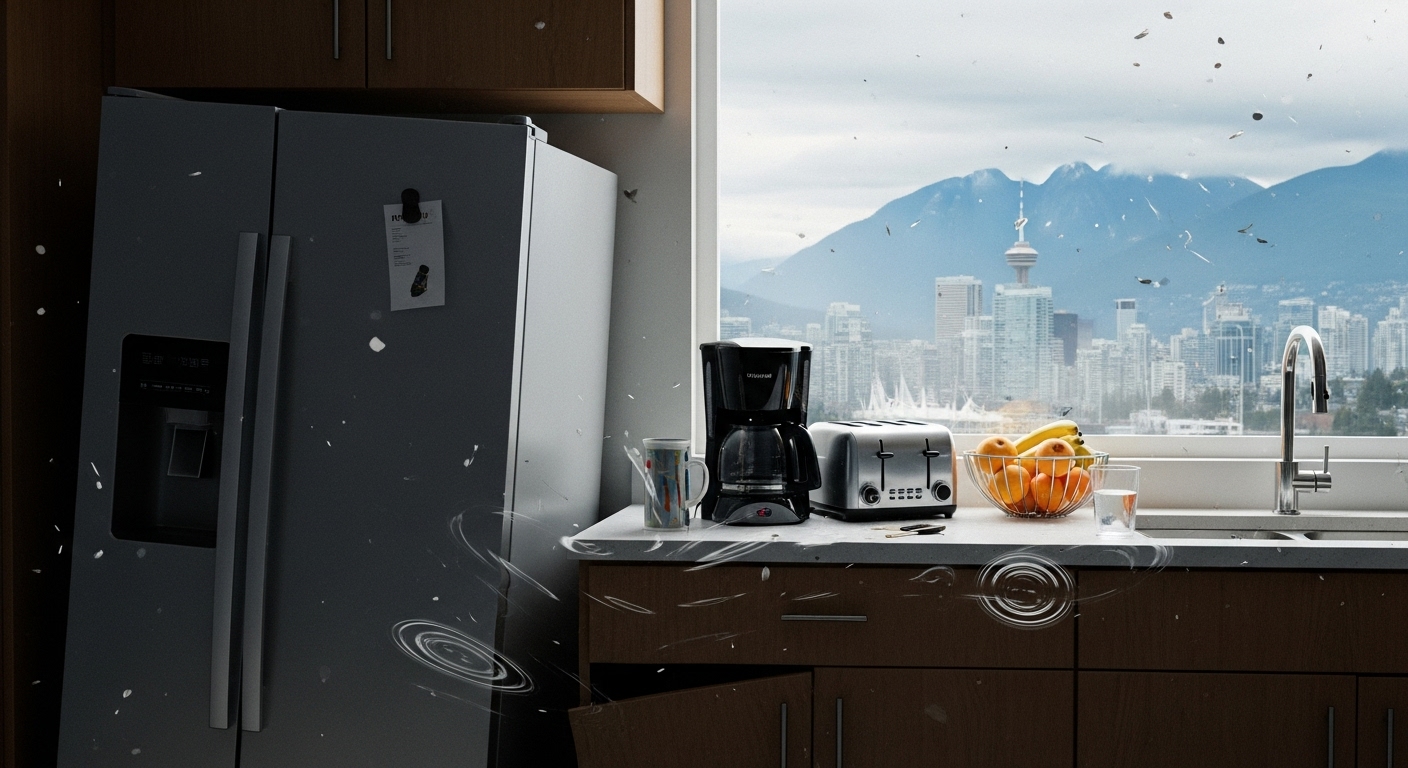
How Different Appliances Fail During Earthquakes
Understanding the specific vulnerabilities of each appliance type helps homeowners prioritize their protection efforts and recognize potential post-earthquake hazards. Each appliance faces unique risks based on its design, weight distribution, and utility connections, and these failure patterns can create dangerous secondary hazards long after the shaking stops.
Refrigerators represent one of the highest-risk appliances due to their top-heavy design and tendency to tip forward when doors swing open during shaking. This tipping motion frequently damages door hinges, breaks internal shelving, and can crush the door seals that maintain proper temperature control. Internal components like compressors and cooling coils can shift during violent shaking, leading to refrigerant leaks or complete system failure. The electrical connections suffer damage when the appliance rocks or shifts position, with power cords being stressed or pulled from outlets while internal wiring gets damaged by heavy component movement.
Washing machines face a unique set of problems due to their heavy drums and complex mechanical systems. During normal operation, these machines contain their internal drum movement, but earthquake shaking can overwhelm these containment systems. The drum can shift position, damaging bearings, suspension rods, and drive mechanisms. Water supply hoses are particularly vulnerable – these pressurized lines can rupture if the machine shifts or if connections experience stress from building movement, quickly flooding laundry areas and causing thousands of dollars in water damage.
Gas-powered appliances present the most serious safety concerns due to their connection to natural gas systems. Ranges, water heaters, furnaces, and dryers can develop dangerous leaks if supply lines become stressed during earthquake movement. These leaks pose immediate fire and explosion risks, making proper flexible connections essential. The heavy cast-iron grates and burner assemblies on gas ranges can shift during earthquakes, potentially misaligning components and affecting proper combustion. Glass cooktops are especially vulnerable to cracking or shattering from vibrations.
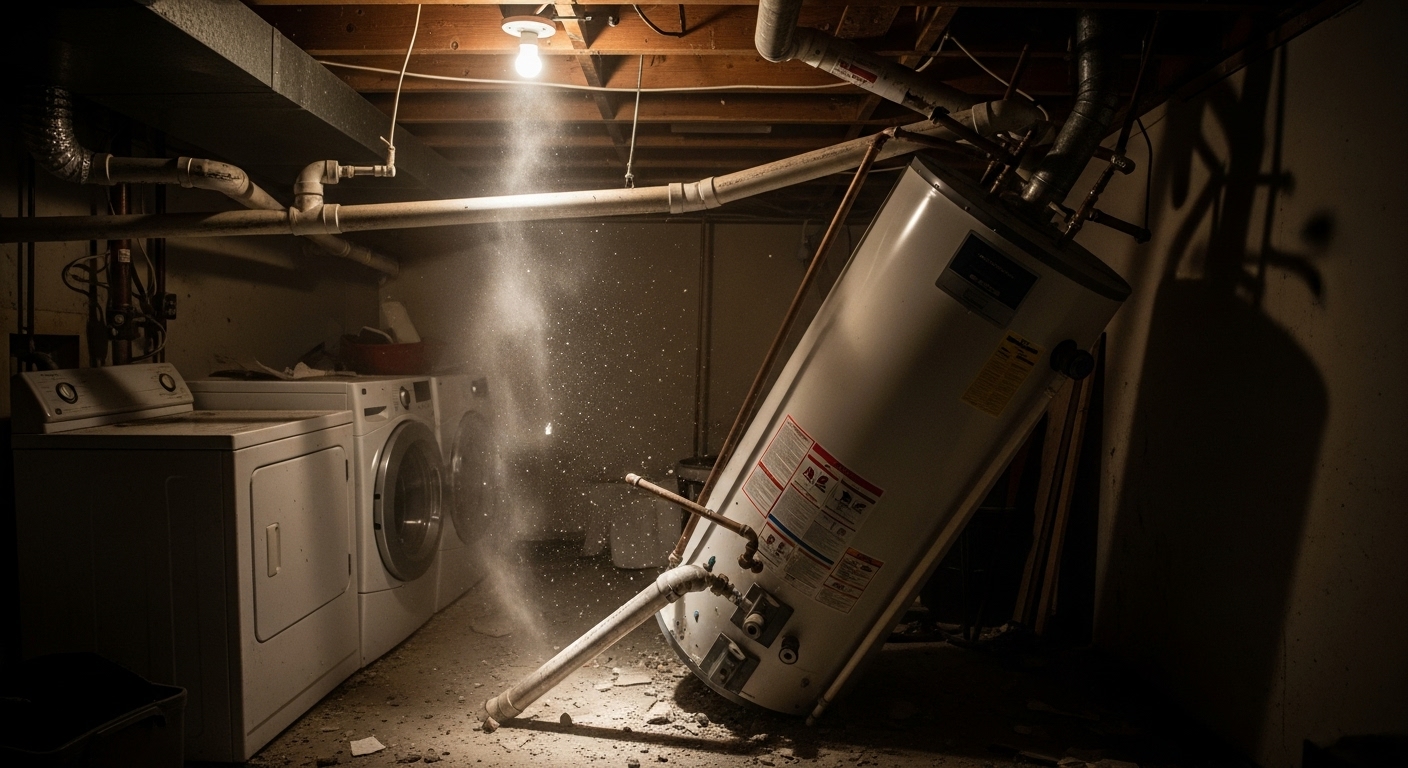
Water Heaters: The Highest-Risk Appliance
Water heaters deserve special attention because they represent one of the highest-risk appliances during earthquakes due to their potential for causing secondary disasters. When water heaters topple over, they can rupture both gas and water supply lines simultaneously, creating immediate fire and flood hazards. The large volume of hot water contained in these appliances can cause extensive damage when released, while damaged gas connections can lead to fires or explosions that threaten entire homes.
Electric water heaters face additional risks from power surges and electrical system damage during earthquakes. The heating elements and thermostats can be damaged by power fluctuations, while electrical connections can be stressed by the movement of the heavy tank. Professional inspection requirements exist for all gas and electrical equipment after natural disasters to ensure safe operation, making post-earthquake assessment critical for homeowner safety.
Pre-Earthquake Protection and Anchoring Methods
Protecting appliances before an earthquake strikes requires a systematic approach that addresses both physical anchoring and utility connection flexibility. The investment in proper seismic protection typically costs a fraction of replacing damaged appliances and can prevent dangerous safety hazards during and after seismic events.
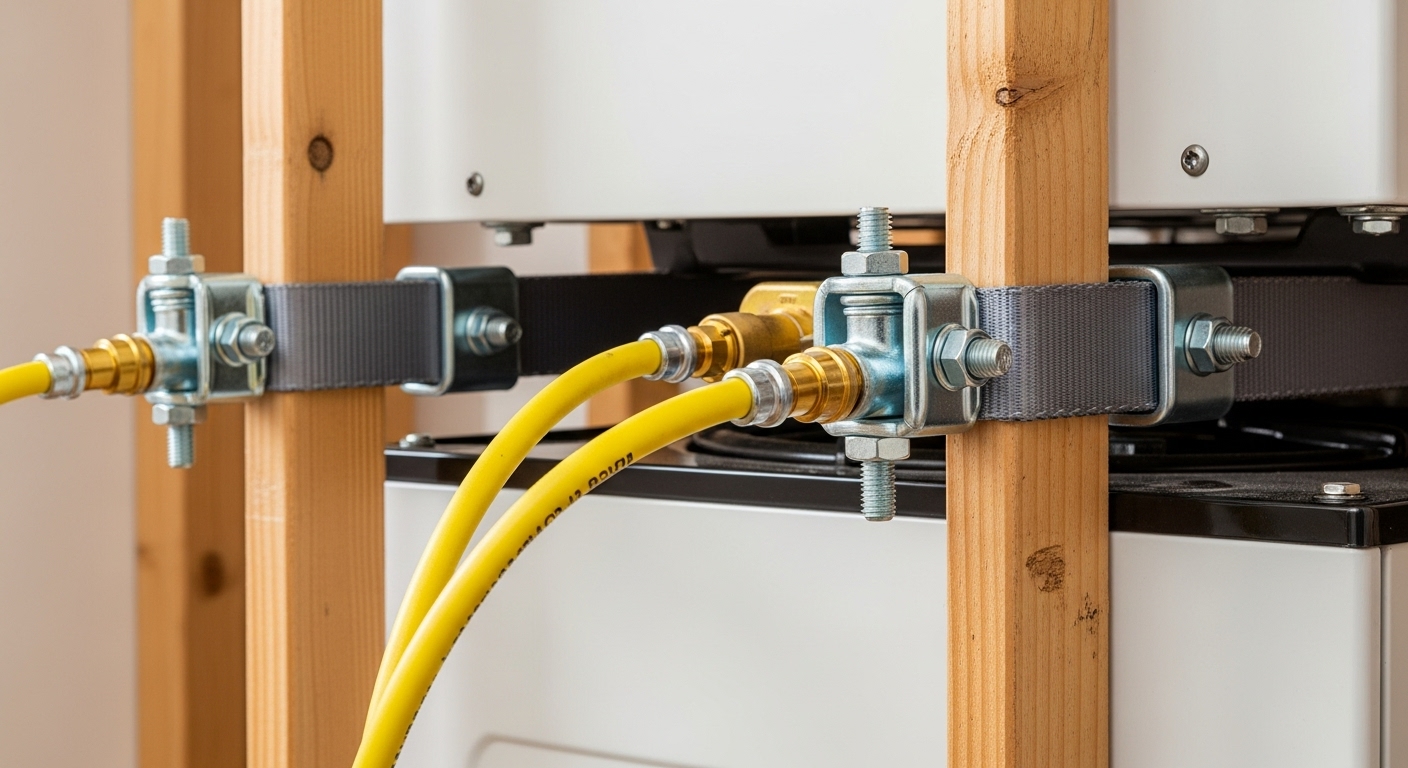
Flexible gas connections represent the most critical safety upgrade for gas-powered appliances in Vancouver. These specialized connectors allow appliances to move during earthquake shaking without breaking the gas supply line, preventing dangerous leaks that could lead to fires or explosions. Flexible gas connectors should accommodate 2-3 inches of movement in all directions and should include automatic shut-off valves when possible.
Seismic straps provide essential anchoring for water heaters and other tall appliances. Use at least two heavy-duty seismic straps to secure your water heater to wall studs, placing one strap in the upper third of the tank and another in the lower third to prevent tipping. For appliances like refrigerators and freezers, flexible nylon straps or specialized appliance anchors secure them to walls while allowing some movement without breaking.
Professional installation becomes crucial when dealing with gas appliances and complex anchoring systems. When installing new appliances, ensure technicians understand Vancouver’s seismic risks and use appropriate flexible connectors and anchoring methods. This investment in professional installation can prevent thousands of dollars in damage and protect your family from serious safety hazards.
Specific Protection Strategies by Appliance Type
Different appliances require tailored protection approaches based on their unique vulnerabilities. Refrigerators benefit from both upper and lower anchoring points to prevent tipping while maintaining door operation. Washing machines should be secured to prevent walking during normal operation while being anchored against earthquake movement. Gas ranges need flexible connectors combined with anti-tip brackets that prevent the appliance from moving away from the wall during shaking.
Water heaters require the most comprehensive protection, including seismic straps, flexible gas and water connections, and proper clearance from walls to prevent damage during movement. The goal is to allow controlled movement while preventing complete toppling or connection rupture that could create dangerous secondary hazards.
Post-Earthquake Appliance Safety Inspection
After an earthquake, your immediate priority should be safety assessment before attempting to use any appliance. Even minor earthquakes can cause hidden damage that creates safety hazards, making systematic inspection essential for protecting your family from secondary earthquake dangers that often prove more dangerous than the initial shaking.
Start by checking for immediate hazards like gas leaks, which present the most serious post-earthquake danger. The smell of rotten eggs indicates a natural gas leak – if detected, avoid using lights or electronics, evacuate immediately, and call the gas company emergency line from a safe distance. Inspect electrical systems for frayed wires, damaged power cords, or signs of sparking around outlets and appliances. If electrical damage is visible, turn off power at the main circuit breaker and contact a licensed electrician.
Examine all water lines and connections for leaks, especially on washing machines, dishwashers, and refrigerators. If leaks are found, shut off the main water supply to prevent flooding. Look for physical damage including signs of appliance shifting, tipping, or damage to doors, seals, and internal components. Don’t attempt to move heavy appliances that have shifted until it can be done safely.
When power is restored, listen carefully for unusual noises from appliances – buzzing, humming, or grinding sounds could indicate internal damage from earthquake movement. These warning signs often appear hours or days after the earthquake as damaged components begin to fail under normal operating stress.
Professional Inspection Requirements
Certain situations absolutely require professional expertise rather than homeowner assessment. Any gas leak, even if turned off, requires professional inspection before the appliance can be safely used again. Appliances that tipped over may have hidden structural damage or compromised internal components not visible during visual inspection. Municipal emergency protocols often specify when professional inspection becomes mandatory for insurance and safety compliance.
Visible electrical damage, water damage exposure, and any uncertainty about appliance condition warrant professional assessment. Technicians have specialized tools and knowledge to safely diagnose earthquake-related damage while ensuring appliances meet all safety codes before restoration to service.
When Professional Appliance Repair Becomes Essential
Recognizing when to call professional appliance repair services can mean the difference between safe restoration and dangerous DIY mistakes that compromise your family’s safety. Certain post-earthquake situations require specialized expertise that goes beyond typical homeowner capabilities, particularly when dealing with gas systems, electrical damage, or structural appliance damage.
Gas-related issues always demand professional intervention. Even if you’ve successfully turned off gas supplies, professional inspection must verify system integrity before restoration. Licensed technicians understand gas system safety requirements and can identify subtle damage that homeowners might miss. Similarly, any appliance that has tipped over requires professional assessment, as internal damage may not be visible but could create safety hazards or lead to premature failure.
Electrical damage from power surges or physical stress during earthquakes creates fire and shock hazards that require professional electrical expertise. Water damage exposure, particularly in electrical appliances, compromises safety systems and insulation in ways that aren’t immediately apparent. Professional technicians can properly assess these risks and restore appliances to safe operating condition.
Frequently Asked Questions
How much does it cost to earthquake-proof my appliances?
The cost is minimal compared to replacement expenses or potential safety hazards. A set of seismic straps for water heaters or refrigerators typically costs between $20 and $50, while flexible gas connectors range from $30 to $60. Professional installation adds to costs but ensures proper safety compliance and may be required for insurance coverage. Most homeowners can protect their major appliances for under $300, far less than replacing damaged appliances or dealing with secondary earthquake damage.
Can I install seismic protection myself or do I need professionals?
While installing seismic straps can be a DIY project for those comfortable with basic tools and construction, flexible gas line installation should always be performed by licensed gas fitters to ensure safety and prevent leaks. Electrical work and complex anchoring systems also benefit from professional installation. The key is knowing your limits – improper gas work can create life-threatening hazards that far exceed any cost savings from DIY installation.
Are newer appliances more earthquake-resistant than older models?
Not necessarily – while modern appliances may have improved construction, they remain vulnerable to tipping and connection damage if not properly secured. The key to earthquake safety lies in anchoring and flexible connections, not appliance age. In fact, some newer appliances with electronic controls may be more vulnerable to power surges and electrical damage during earthquakes than simpler older models.
Wrapping Up
Living in Vancouver means accepting seismic risk as part of life, but it doesn’t mean living unprepared. Taking proactive steps to secure your appliances through proper anchoring, flexible connections, and professional installation represents a small investment that provides invaluable protection for your family and property. Whether you’re in Burnaby, Richmond, or North Vancouver, the geological realities of our region make appliance earthquake preparation essential rather than optional.
When you’re ready to protect your appliances or need professional assessment after seismic activity, Starline Appliance Repair North Vancouver brings the specialized expertise required for earthquake-related appliance issues. Our technicians understand Vancouver’s unique seismic challenges and can help you implement proper protection measures or safely restore earthquake-damaged appliances to ensure your family’s continued safety and your appliances’ reliable operation.