

Nobody wants to walk into their laundry room and find water spreading across the floor – it’s one of those moments where your stomach drops and your brain immediately jumps to worst-case scenarios. The good news is that a leaking washing machine is usually fixable, and this guide will walk you through the most common causes, what to check first, and when it makes sense to call in a pro. Vancouver homes deal with a lot of laundry. Between the wet winters, outdoor gear, and the general demands of family life in a busy city, washing machines here get a real workout. At Starline Appliance Repair North Vancouver, we see washing machine leaks regularly, and the truth is that many of them come down to a handful of very predictable problems. Some you can sort out in ten minutes. Others require a technician. Knowing the difference saves you time, money, and a lot of unnecessary stress. It’s also worth noting that Vancouver’s older housing stock – particularly in established neighborhoods – tends to have laundry setups that haven’t been touched in years. Hoses age. Connections loosen. Filters get neglected. These things catch up with you eventually.
Key takeaways
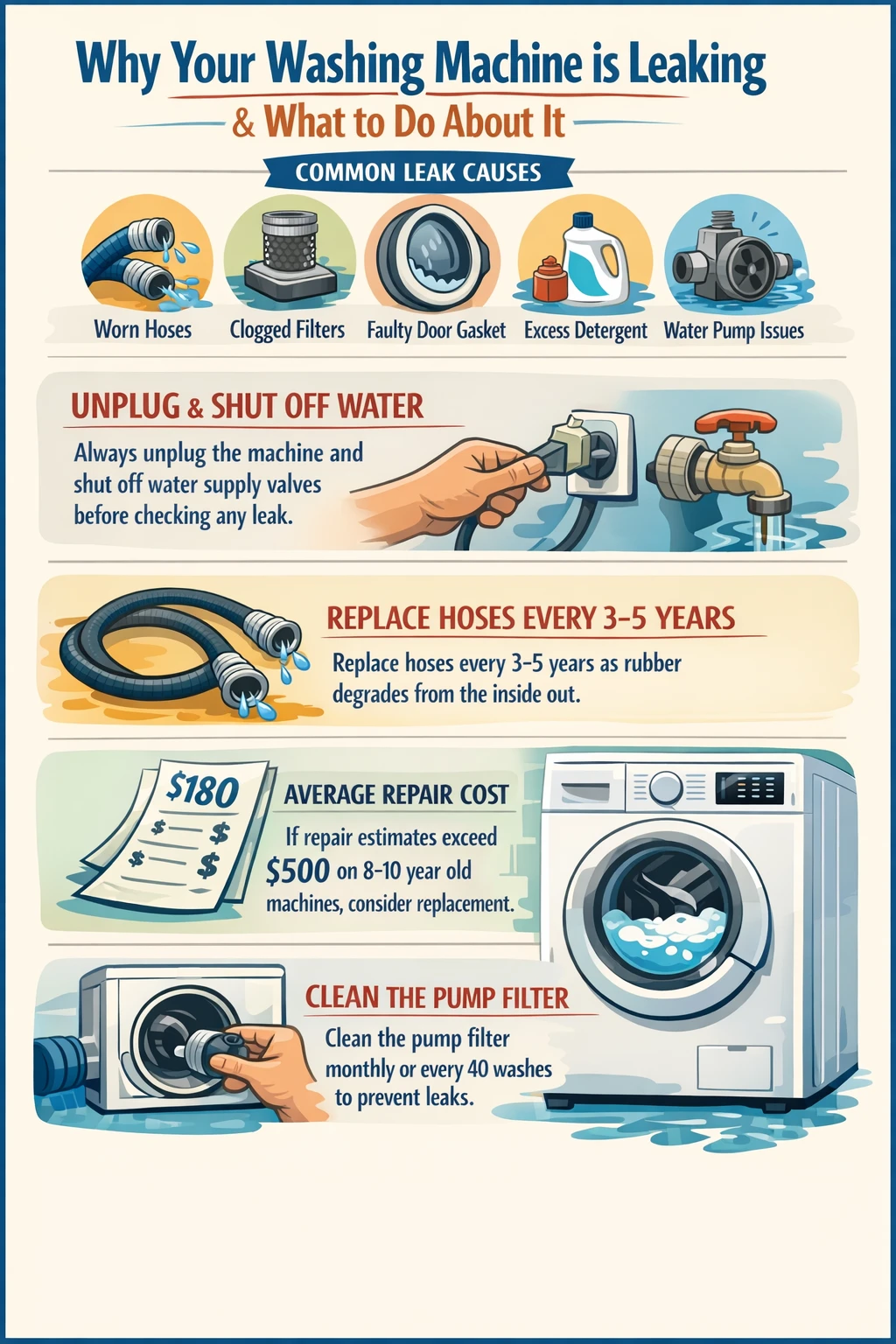
- Most washing machine leaks trace back to one of a few common causes: worn hoses, a clogged filter, a faulty door gasket, too much detergent, or a damaged water pump.
- Before you do anything, unplug the machine and shut off the hot and cold water supply valves – this protects you from electrical hazard and prevents more water from making the situation worse.
- Washing machine hoses should be replaced every 3 to 5 years, even if they look fine from the outside, because rubber degrades from the inside out.
- The average cost to repair a washing machine leak runs around $180, with front-loaders generally costing more to fix than top-loaders.
- If your repair estimate climbs above $500, it’s worth comparing that against the cost of a new machine, especially if yours is already 8 to 10 years old.
- A clogged pump filter on a front-load washer – something Samsung recommends cleaning at least once a month or every 40 washes – is one of the most overlooked causes of leaks.
Why is your washing machine leaking?
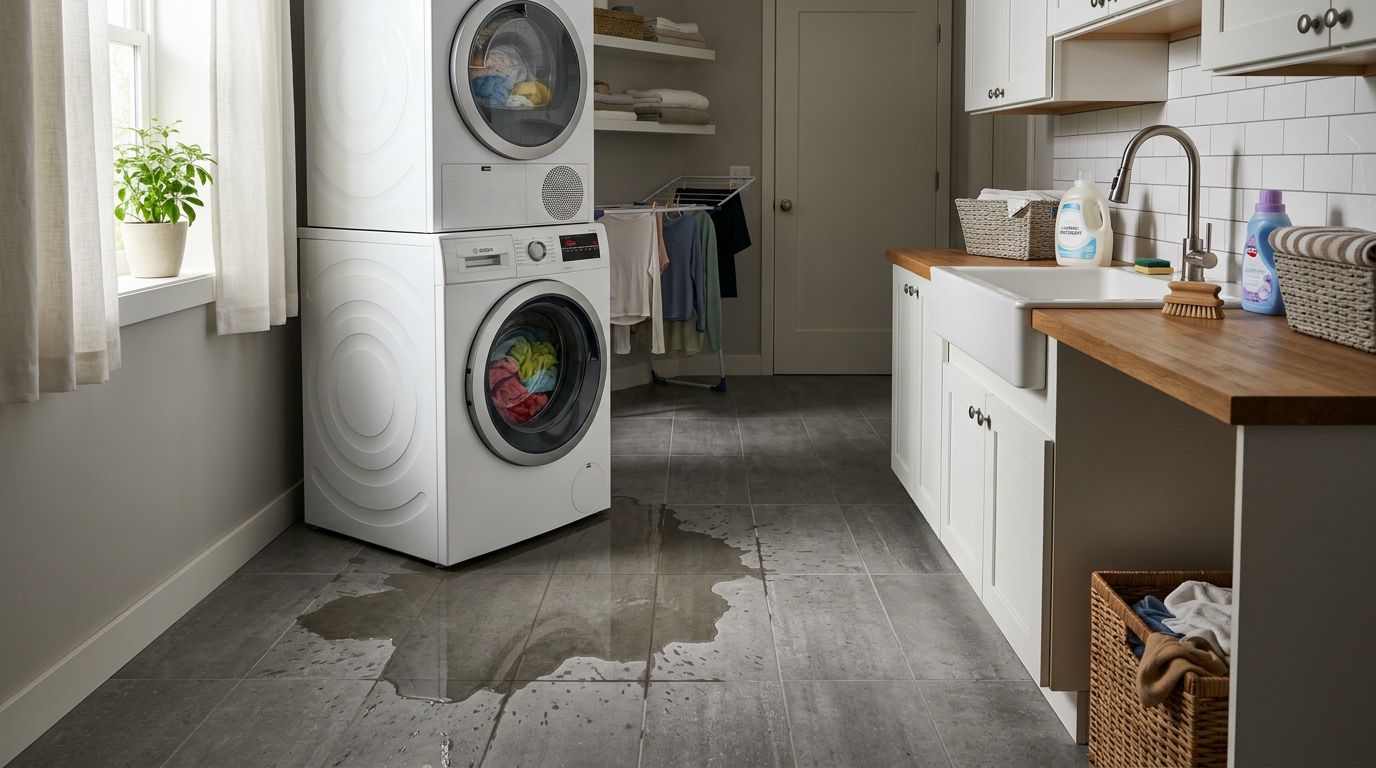 Most washing machine leaks come from one of three areas: the hoses and connections at the back, the door seal or gasket at the front, or internal components like the pump, tub seal, or water level switch. The location of the leak and when it happens during the wash cycle are your two biggest clues. A puddle that shows up during the fill cycle points to different problems than water that appears only during the spin or drain. Honestly, the first thing to do is dry up the water, then run a normal cycle and watch closely. Is the water coming from the back? The front? Is it appearing at the start, the middle, or the end? That information narrows things down fast. We see a real mix of issues in this work – from something as simple as a loose hose clamp to a cracked outer tub that requires a full disassembly. Most of the time, though, it’s the simple stuff.
The most common culprits, starting with the easy ones
Start with the hoses. The fill hoses – one hot, one cold – connect the machine to your water supply at the wall. Over time, the rubber degrades, the connections loosen, and the small rubber washers inside the fittings wear out. Water then drips slowly down the back of the machine and pools on the floor. It looks alarming, but replacing hoses is a straightforward job. Pull the machine away from the wall, shut off the supply valves, and inspect each hose from end to end. Look for bulging, cracking, corrosion, or any sign that the fittings aren’t seated properly. Tighten what’s loose. Replace what’s damaged. If you’re upgrading, stainless steel braided hoses are a better long-term choice than standard rubber ones. 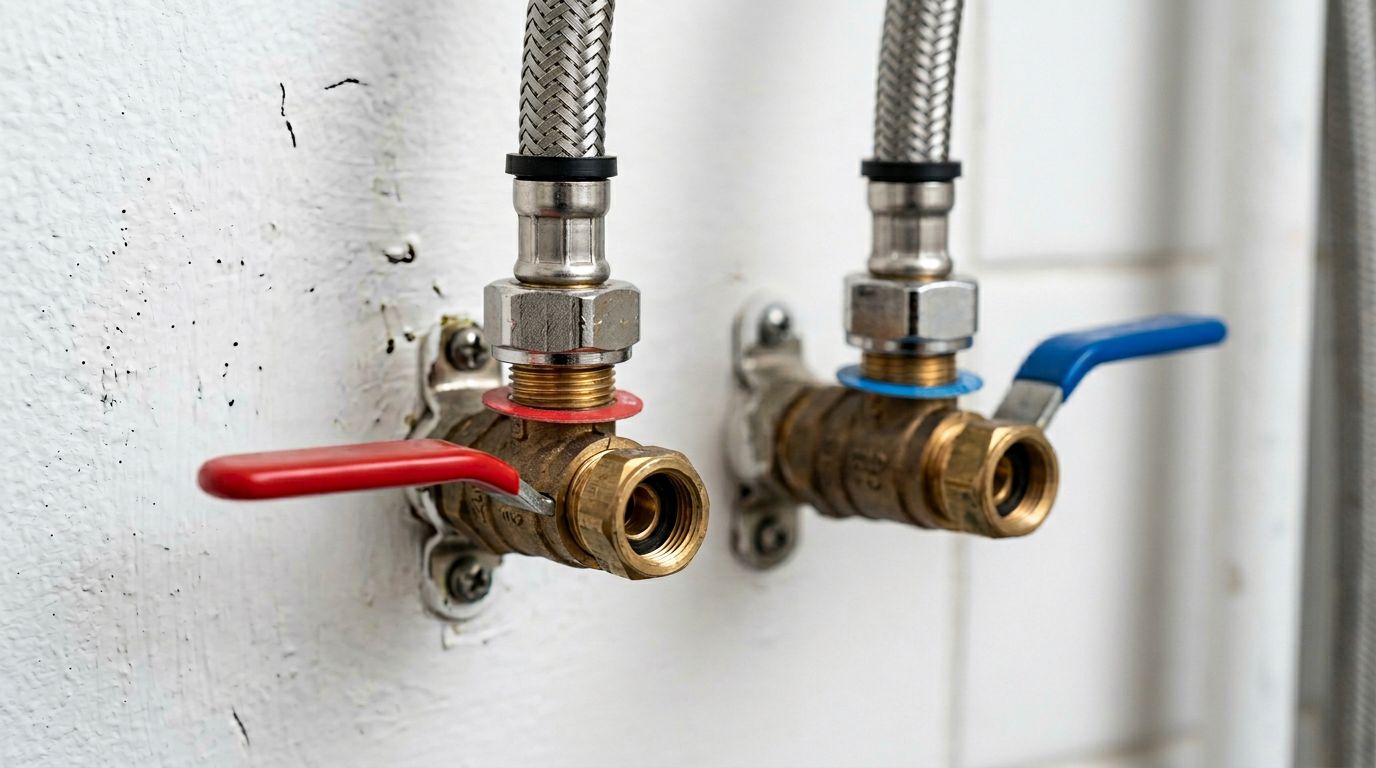 The drain hose is another common source of trouble. This is the hose that carries dirty water out of the tub and into your standpipe or utility sink. If it’s kinked, blocked, or not inserted correctly, water backs up and spills. Samsung’s installation guidelines specify that the drain hose should be inserted between 6 and 8 inches into the drain pipe – too shallow and it falls out, too deep and it creates a siphoning effect that causes its own set of problems. The hose also needs to be positioned at least 18 inches off the ground and no more than 96 inches high. These aren’t arbitrary numbers. Getting the installation wrong is a surprisingly common cause of leaks, even on machines that aren’t old. Detergent is another culprit that doesn’t get enough attention. Using too much – or using regular detergent in a high-efficiency machine – creates excessive suds that back up through the overflow system and leak out. This is especially common in front-load washers. A quick test: take a freshly washed item and put it in a bowl of clean water. If the water turns soapy, you’re overdoing the detergent. Run a few empty cycles without any soap to clear the residue, then cut back on your detergent going forward. It costs nothing to fix.
Leaks from the door or front of the machine
Front-load washers use a large rubber gasket – sometimes called a door boot seal – to create a watertight seal when the door is closed. This gasket takes a lot of wear, and it’s also a magnet for mold, detergent buildup, and small debris. A single strand of hair or a piece of thread caught under the seal can be enough to cause a leak. 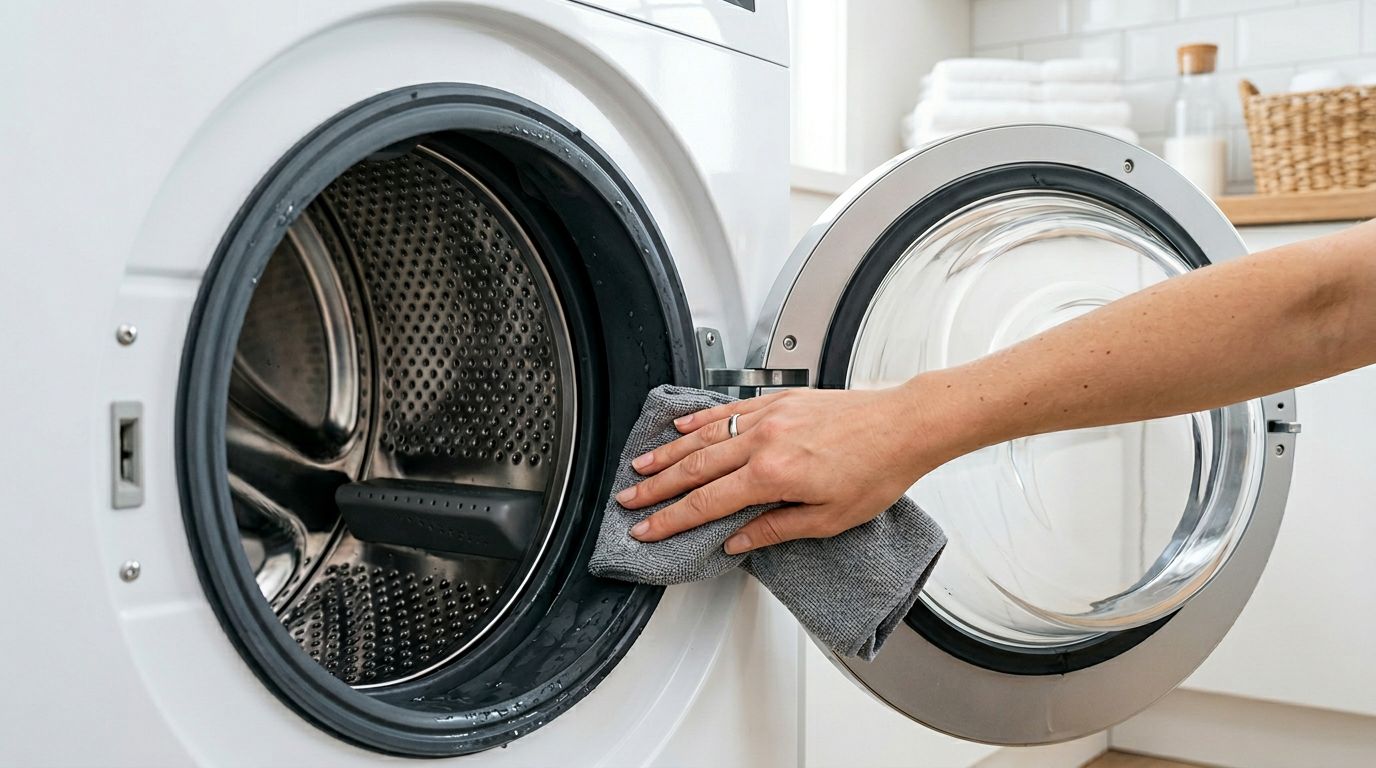 Start by wiping down the gasket with a damp cloth and inspecting it carefully, folding it back gently to check for anything lodged underneath. If you see mold or residue, clean it with a mildew cleaner or white vinegar. If the gasket is torn, permanently deformed, or cracked, it needs to be replaced. That’s typically a job for a technician, since getting the new gasket seated properly requires some patience and the right approach. A misaligned door can also cause leaking even when the gasket is in good shape. If the door hinges have loosened over time, the door won’t close flush and water escapes. Check the alignment and tighten the hinges. If the door still doesn’t close properly after that, it’s time to book a service call.
Water leaking from the bottom
Water pooling directly under the machine – especially in the center – often points to the water pump or the tub seal. The water pump is responsible for circulating water during the wash cycle and pushing it out during the drain cycle. If the pump is cracked, or if the clamps holding the connected hoses have loosened, water drips from the bottom of the machine. Some pumps can be replaced by a confident DIYer, but getting access to the pump means moving hoses and potentially disturbing other components. Professional help is worth considering here. The tub seal is a separate issue. Your washing machine actually has two tubs: a perforated inner tub that holds the clothes, and a solid outer tub that holds the water. The tub seal sits between the outer tub and the transmission that drives it. When this seal wears out, water leaks directly under the machine during the wash cycle. Replacing a tub seal involves significant disassembly – this isn’t a quick job. For older machines, it’s worth weighing the repair cost against the age of the unit before committing to that repair. We get calls about bottom leaks from homes across North Vancouver and the surrounding area, and a good portion of them turn out to be hose clamps or pump connections rather than the tub seal. It’s always worth checking the simpler things first.
Leaks that happen at specific points in the cycle
Timing matters. A leak during the fill cycle usually points to the fill hoses, the inlet valve, or an internal water tube. The inlet valve controls water flow into the tub – if it’s cracked or damaged, water drips even when the machine is off. To check it, unplug the machine, pull it away from the wall, and look at the valve where the hoses connect at the back. Visible cracks or corrosion mean it needs to be replaced. A leak during the spin cycle is often an issue with machine level. An unlevel washer vibrates and shifts, which loosens connections and can force water past door seals. Use a carpenter’s level on top of the machine, check it front-to-back and side-to-side, and adjust the leveling feet until it sits flat. It’s a five-minute job, and it’s surprising how often it solves the problem. Recheck the level every few months – floors shift, especially in older homes. Leaks that only appear during the drain cycle often come down to the drain hose, its clamps, or the drain pump. Loose clamps can usually be tightened. A damaged pump needs replacement. If the machine’s home drain pipe is partially blocked with lint, that can also cause water to back up and overflow even when the washer itself is working fine. A drain cleaning solution or a small auger can clear most household clogs.
When a clogged filter is the problem
This one catches a lot of people off guard. Most front-load washing machines have a pump filter – also called a debris filter – located at the front of the unit near the bottom, usually behind a small panel. Its job is to catch lint, coins, hair elastics, and whatever else escapes the pockets of your laundry before it reaches the pump. When that filter gets clogged, pressure builds up and water leaks during the drain cycle. The fix is simple: open the panel, place a towel and a shallow container underneath to catch the water, twist off the drain cap, let the water drain out, then unscrew and clean the filter. Use a soft brush to clear any debris, then rinse it and put it back. The whole process takes about ten minutes once you’ve done it once. Samsung recommends cleaning this filter at least once a month, or every 40 washes. Most people have never done it. If you have a front-load machine and you’ve never cleaned the filter, that’s the first place to look when a leak appears. Homeowners in Lynn Valley and Edgemont Village with newer front-load machines often call about mystery leaks that turn out to be nothing more than a neglected filter.
Overloading and leveling – two underrated causes
Stuffing too much laundry into a single load causes more problems than most people realize. An overloaded drum goes off balance during the spin cycle, water sloshes into places it shouldn’t be, and seals that are working fine under normal conditions suddenly can’t keep up. The fix is just to wash smaller loads, which is easier said than done on a busy weekend – but it genuinely makes a difference over the life of the machine. An unlevel machine compounds this. When the washer sits slightly tilted, the drum doesn’t spin evenly, vibration increases, and connections loosen gradually over time. Getting the machine level isn’t just about preventing leaks in the moment – it’s about reducing wear on every component. The U.S. Department of Energy also notes that properly loaded and maintained washers use less energy and water per cycle, so there’s a practical bonus to getting this right.
Frequently asked questions
These are the questions we hear most often when someone calls about a washing machine leak. The answers here should help you figure out your next step before picking up the phone.
Can a clogged filter cause a washing machine to leak?
Yes, and it’s one of the more common causes on front-load machines. A blocked pump filter restricts drainage, which builds pressure and forces water out during the drain cycle. Cleaning the filter – a routine maintenance task most owners skip entirely – often resolves the leak without any parts or professional help needed.
Why does my washing machine only leak sometimes?
Intermittent leaks are usually tied to specific points in the wash cycle. A leak that only appears during the fill cycle points to hose connections or the inlet valve. One that only shows up during spin often comes down to an unlevel machine or an overloaded drum. Leaks during drain usually involve the drain hose or pump. Watching when the leak happens will tell you where to look.
Should there be water at the bottom of my washing machine after a cycle?
No. After a complete wash cycle, the tub should be fully drained. If you’re consistently finding standing water inside the tub after the cycle finishes, the drain pump may be failing or the drain hose may be partially blocked. This is different from a leak – the water stays inside rather than escaping onto the floor – but it points to the same general area of the machine.
How do I know if my washing machine leak is serious enough to call a professional?
If you’ve checked the obvious things – hoses, filter, detergent, level – and the leak continues, that’s your cue to call someone. Internal problems like a damaged water pump, a failed tub seal, a cracked outer tub, or a malfunctioning water level switch aren’t practical DIY repairs for most homeowners. Getting a diagnosis wrong can turn a $180 repair into something much more expensive, or cause water damage that costs far more than the machine is worth.
Is it worth repairing a leaking washing machine or should I replace it?
It depends on the age of the machine and the cost of the repair. Most washing machines are built to last 8 to 10 years. If repair costs are climbing above $500 and the machine is already most of the way through its expected lifespan, a replacement often makes more financial sense. For a newer machine with a straightforward repair, fixing it is almost always the better call.
Wrapping up
Most washing machine leaks start with something simple – a loose hose, an overdue filter cleaning, too much detergent, or a machine that’s crept out of level over time. Start with those before assuming the worst. If the straightforward checks don’t turn anything up, the problem is likely inside the machine, and that’s where professional diagnosis earns its keep. At Starline Appliance Repair North Vancouver, we handle washer repair across North Vancouver and the surrounding area – including leaks, drainage problems, and everything else that can go wrong with a machine that gets used hard every week. If you’d rather not take the machine apart yourself, or you’ve done the basic checks and still can’t find the source, give us a call and we’ll help you figure out what’s actually going on.